DHL Supply Chain is hosting an internal dissemination event at its Gebze 9 warehouse, bringing together 60 senior professionals from business development and operations, along with selected industrial clients.
Eco Stor demonstrates the battery storage system start-up process within the RECIRCULATE project, showing safe activation from off state to full operation.
Guide to ADR regulations for lithium-ion battery transport, covering safety, classification, packaging, and key chemistries. Download the white paper to learn more.
Explore how Digital Battery Passports, verifiable credentials, and AI enable second-life battery markets. Join our webinar on data, trust, and circular value chains.
RECIRCULATE unveils a breakthrough technology for the safe transport of damaged lithium batteries, tackling a key barrier to scaling circular battery value chains. Discover it at Advanced Battery Power 2026 in Münster, Germany (April 14–16).
As new regulations and circular economy targets come into force, OEMs and battery supply chain participants face growing pressure to track materials, guarantee recycled content, and better understand the condition of batteries across their lifecycle.
Connect with a network of professionals to explore battery reuse and second-life solutions. Access curated research, industry updates, and expert workshops.
Meta description Recirculate takes part in Battery Innovation Days 2025 in Graz, presenting with the Circular Battery Cluster and showcasing advances in battery circularity.
Meta description Recirculate partners met in Oslo to review progress on battery safety, dismantling, digital battery passports, second-life use, and next steps toward battery circularity.
Minespider, a leading traceability software provider for battery and mineral supply chains, launches the MVP Battery and Battery Materials Marketplace Recircle.market,
Second-life batteries face technical, regulatory, and data barriers that slow down reuse and repurposing in Europe. This article explores expert insights on SoH assessment, infrastructure gaps, and how a battery marketplace could unlock circular economy value.
After reaching end of life, EV batteries can be reused, repurposed or recycled. All options will play a vital role in building a circular economy. Here is why.
The article describes the top battery initiatives around the globe focused on ensuring that EV batteries are not only more efficient but also environmentally and ethically responsible throughout their lifecycle. Find out about the top NGOs, associations, industry consortiums and research projects that are working in the battery field.
The transportation of EV batteries presents significant challenges due to strict regulations, varying battery types, and inherent safety risks like fire hazards and thermal runaway. Managing the safe transportation of new, used, and end-of-life batteries becomes increasingly important. This article summarizes the top risks and challenges in battery transportation and provides an expert opinion on this matter.
This article explains Battery Management Systems, their functionality, applications, challenges, and role for second life applications and the circular economy.

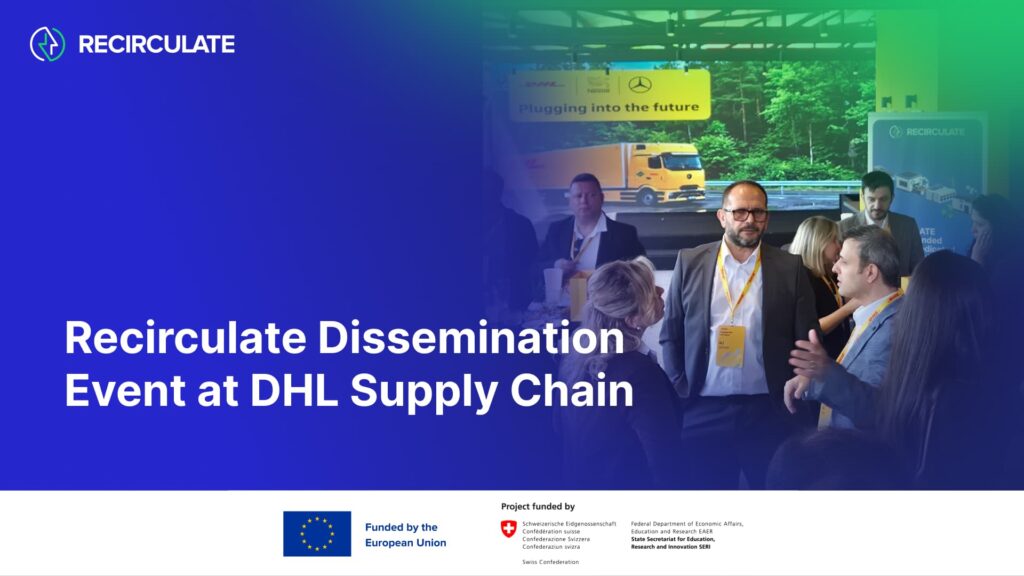 DHL Supply Chain is hosting an internal dissemination event at its Gebze 9 warehouse, bringing together 60 senior professionals from business development and operations, along with selected industrial clients.
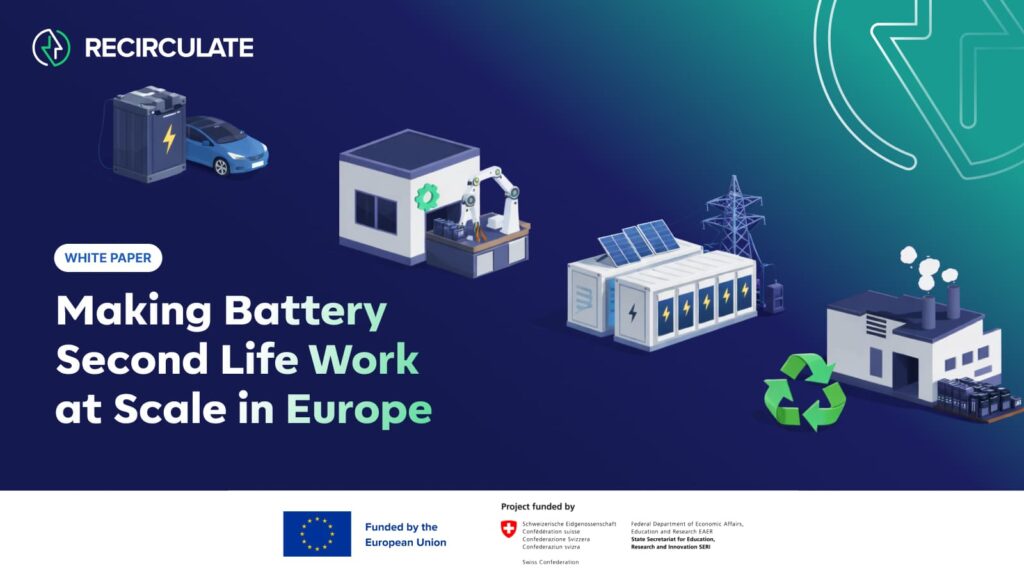 RECIRCULATE project advances second-life lithium battery reuse with fast diagnostics, Digital Battery Passports, and safer circular supply chains.
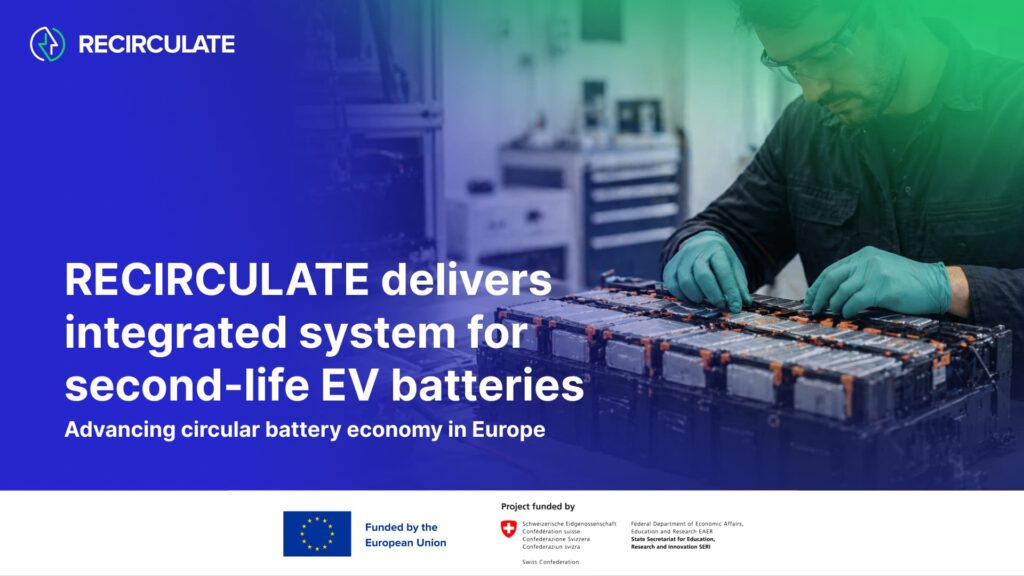 RECIRCULATE unveils a validated system for second-life EV batteries, enabling safer reuse and advancing Europe’s circular battery economy.
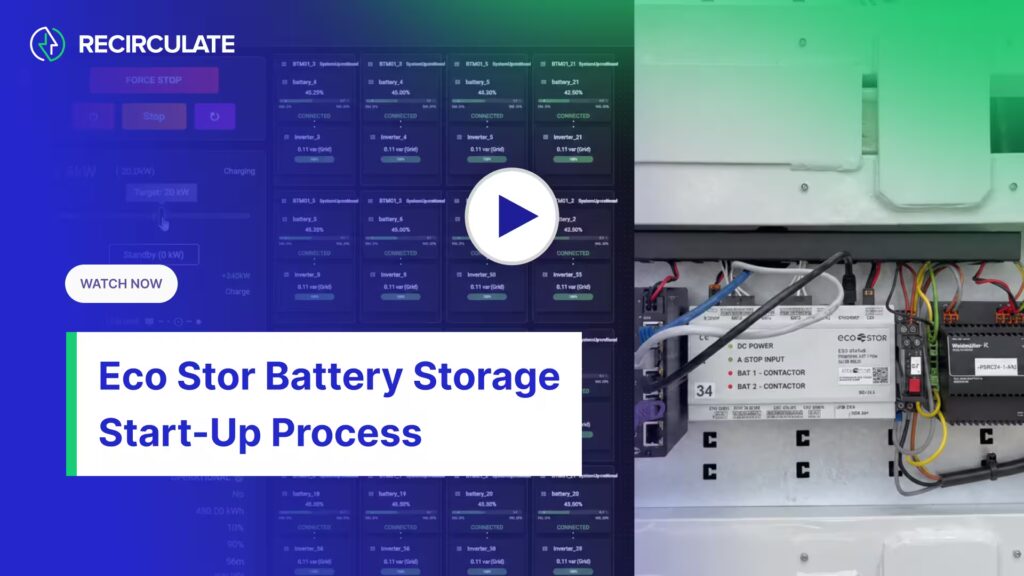 Eco Stor demonstrates the battery storage system start-up process within the RECIRCULATE project, showing safe activation from off state to full operation.
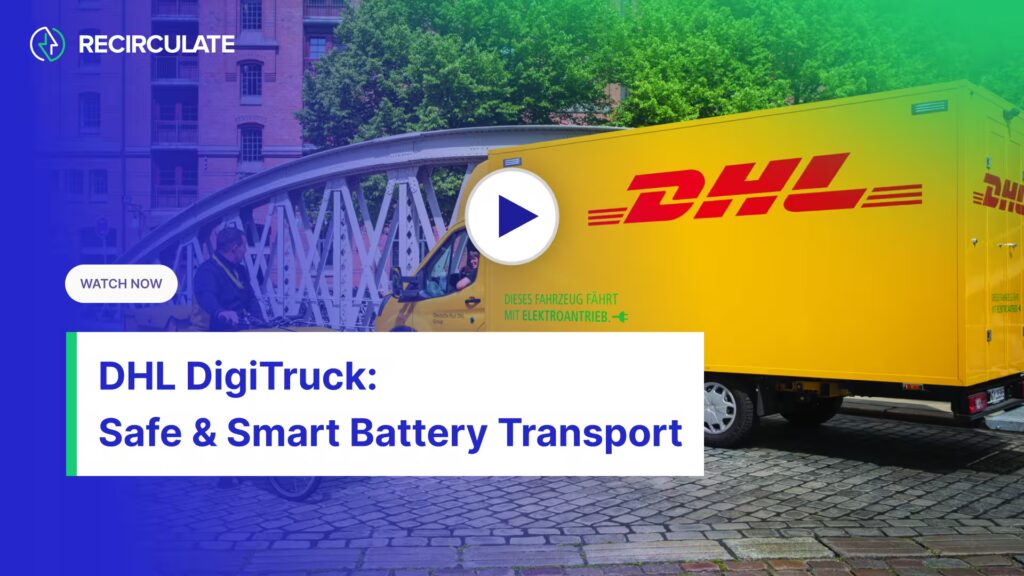 DHL’s DigiTruck system uses IoT and telematics to improve battery transport safety, with research on driver fatigue and smarter logistics.
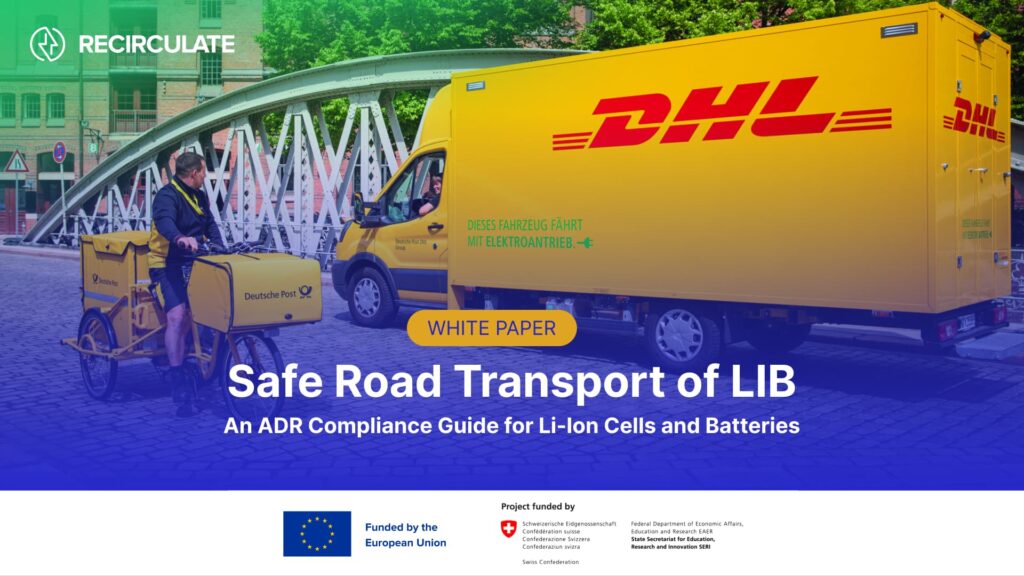 Guide to ADR regulations for lithium-ion battery transport, covering safety, classification, packaging, and key chemistries. Download the white paper to learn more.
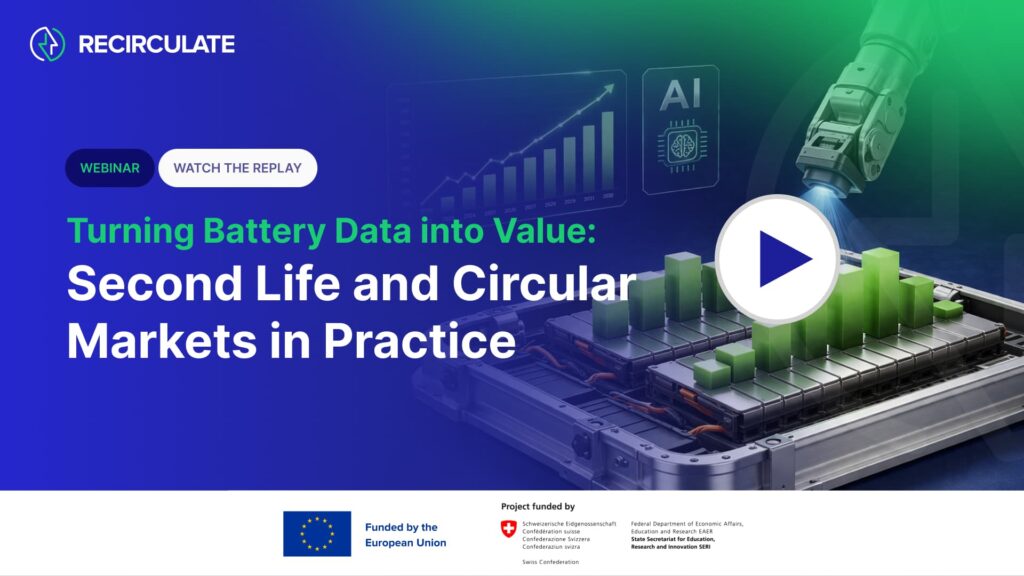 Watch the Recirculate webinar on how Digital Battery Passports, AI, and verifiable data enable second-life battery markets and circular value chains.
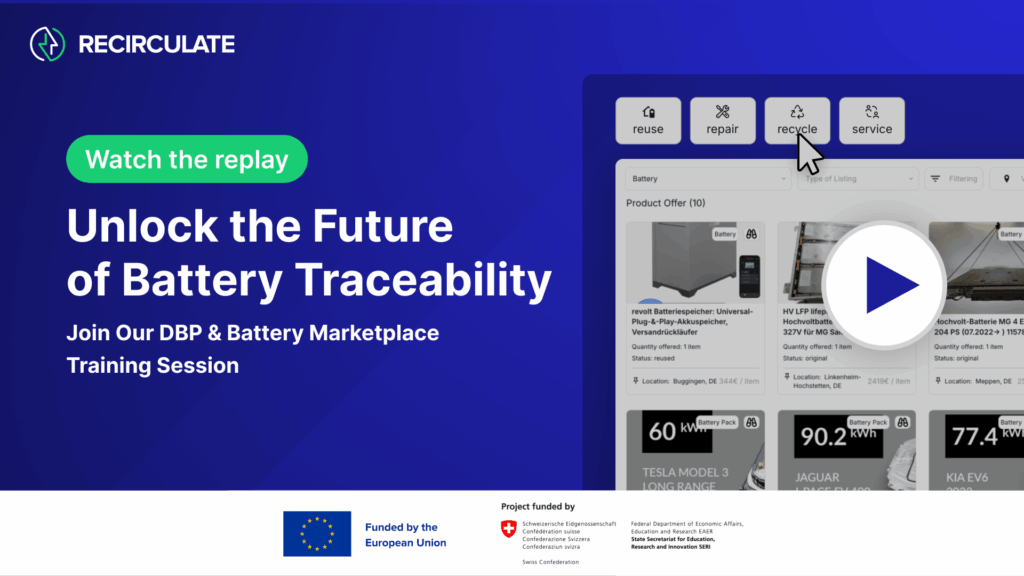 Training on Digital Battery Passports and Recircle Marketplace covering EU regulation, second-life batteries, and a live platform demo.
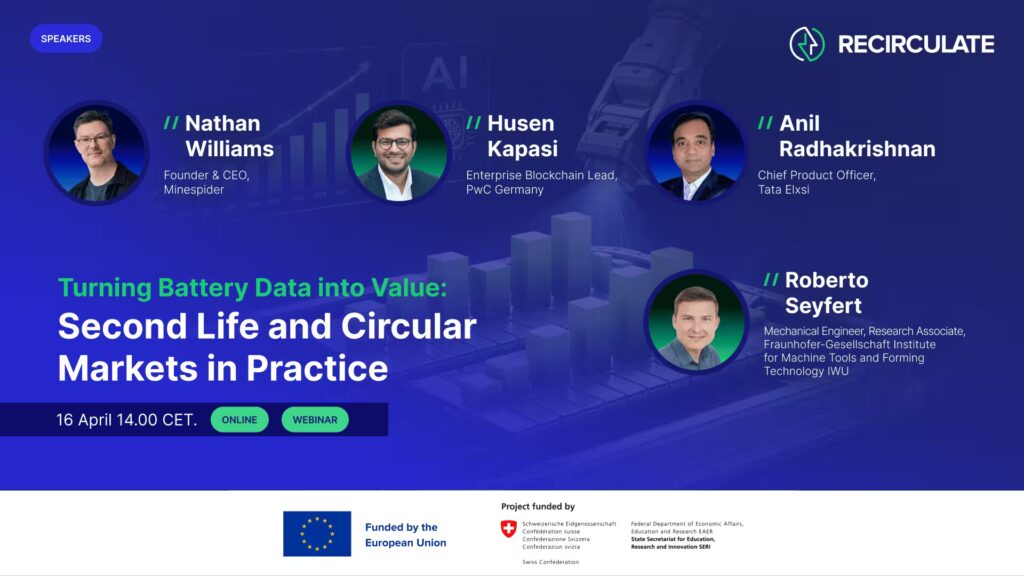 Explore how Digital Battery Passports, verifiable credentials, and AI enable second-life battery markets. Join our webinar on data, trust, and circular value chains.
 RECIRCULATE unveils a breakthrough technology for the safe transport of damaged lithium batteries, tackling a key barrier to scaling circular battery value chains. Discover it at Advanced Battery Power 2026 in Münster, Germany (April 14–16).
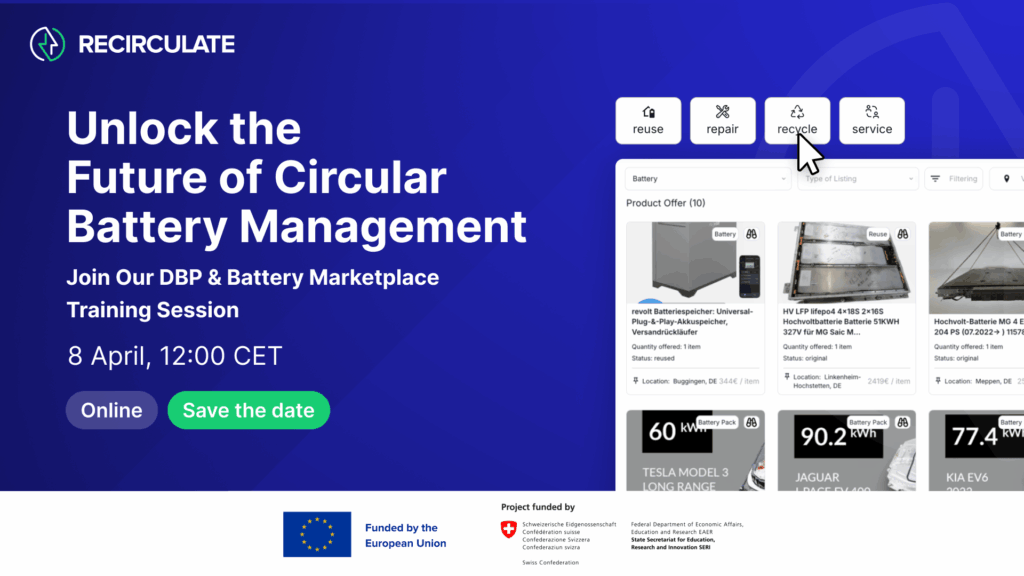 Join our training on Digital Battery Passports & Recircle Marketplace to explore regulations, circular battery solutions, and business opportunities.
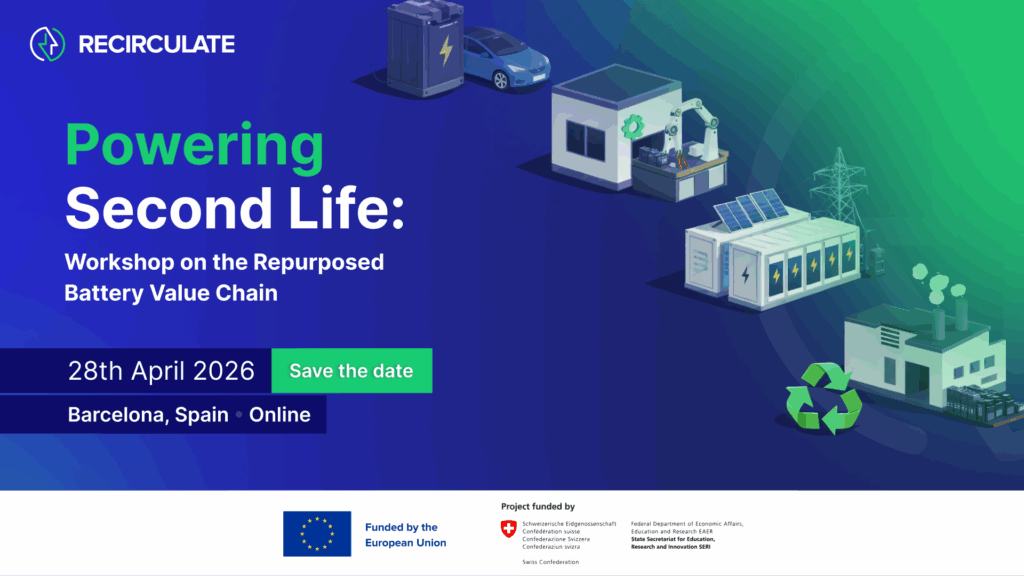 As new regulations and circular economy targets come into force, OEMs and battery supply chain participants face growing pressure to track materials, guarantee recycled content, and better understand the condition of batteries across their lifecycle.
 Discover how automation, AI, and robotics are reshaping battery inspection and disassembly to drive safer, faster, and more scalable recycling.
 Connect with a network of professionals to explore battery reuse and second-life solutions. Access curated research, industry updates, and expert workshops.
 Meta description Recirculate takes part in Battery Innovation Days 2025 in Graz, presenting with the Circular Battery Cluster and showcasing advances in battery circularity.
 Meta description Recirculate partners met in Oslo to review progress on battery safety, dismantling, digital battery passports, second-life use, and next steps toward battery circularity.
 Minespider, a leading traceability software provider for battery and mineral supply chains, launches the MVP Battery and Battery Materials Marketplace Recircle.market,
 Second-life batteries face technical, regulatory, and data barriers that slow down reuse and repurposing in Europe. This article explores expert insights on SoH assessment, infrastructure gaps, and how a battery marketplace could unlock circular economy value.
 After reaching end of life, EV batteries can be reused, repurposed or recycled. All options will play a vital role in building a circular economy. Here is why.
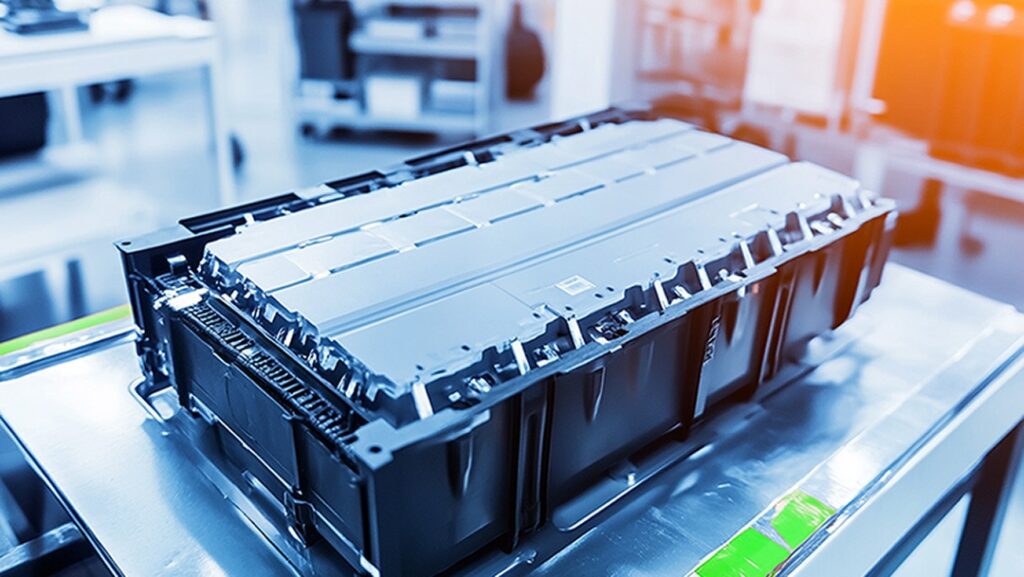 The article describes the top battery initiatives around the globe focused on ensuring that EV batteries are not only more efficient but also environmentally and ethically responsible throughout their lifecycle. Find out about the top NGOs, associations, industry consortiums and research projects that are working in the battery field.
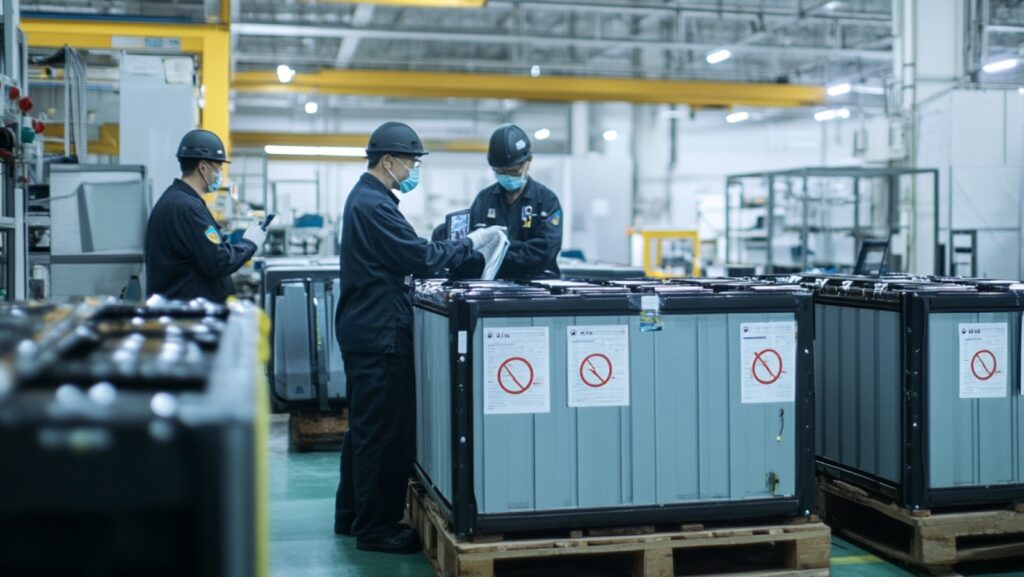 The transportation of EV batteries presents significant challenges due to strict regulations, varying battery types, and inherent safety risks like fire hazards and thermal runaway. Managing the safe transportation of new, used, and end-of-life batteries becomes increasingly important. This article summarizes the top risks and challenges in battery transportation and provides an expert opinion on this matter.
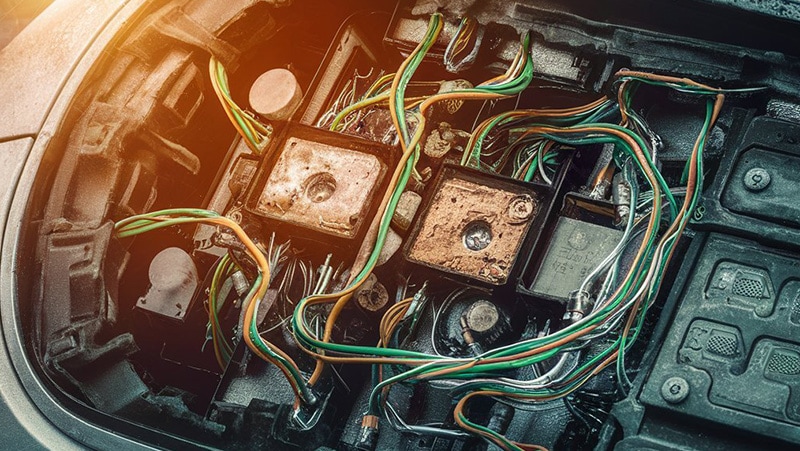 This article explains Battery Management Systems, their functionality, applications, challenges, and role for second life applications and the circular economy.
 Used batteries have several application areas and present benefits such as lower cost, longer life cycle of battery, and less environmental effects.
 Discover the transformative journey of the RECIRCULATE project as it pioneers inclusive battery recycling innovation. RECIRCULATE project partner Iconiq Innovation… Read more: Sex and Gender Dimensions in Research & Innovation